 Story Designer

 How to create action in a screenplay
A film script isn't built the way children write stories - event after event.
That's a recipe for dullness. Unfortunately, many books are written like that.
A screenplay must consist of actions, meaning events connected by cause and effect.
| A fox goes for a walk and finds honeycombs. He's surprised. A bear appears - it's his honey! He thinks the fox wants to steal it and chases him. The fox escapes into a hollow tree but sprains his paw - setting up the next scene. Now he can't move freely, and if the bear finds him? | 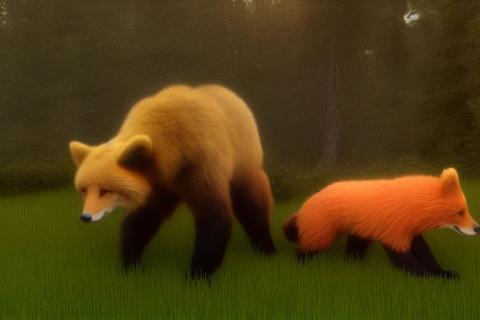 |
That's a chain of events, where each event results from the previous one.
In life, anything valuable comes at a cost.
You must fight for it, pay a price for success or even for trying.
Example:
| The bear manages to get the honey but is chased and stung by mutant bees with powerful venom. He escapes, but at the cost of a broken paw - and loses the honey. So he can escape and win something but must pay a price. He can also lose and still pay dearly. Whenever something is valuable, there must be guardians protecting it fiercely. |  |
Example:
When the bear thinks he's safe, it turns out the mutant bees are smarter than expected - now they're hunting him to eliminate the threat.